
Philosophy visual art (picture) & artist statement
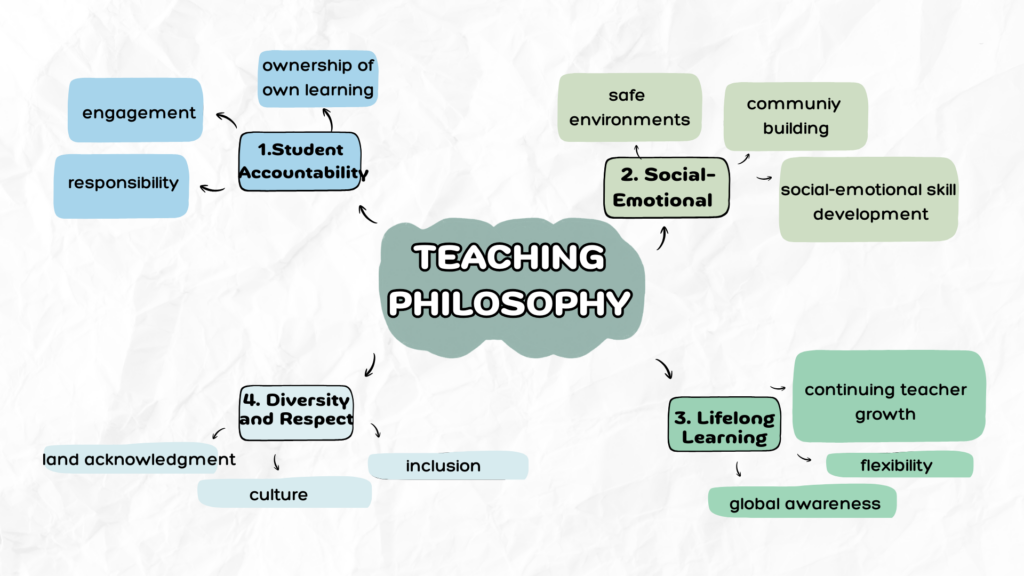
My Teaching Philosophy
- Student-Centred with Accountability: I believe in a student-centred approach, but students also need to actively take responsibility for their own learning. We can truly teach students when they are willing to engage and learn.
- Value of Schooling: Keeping students and minors in school serves a critical purpose beyond academics. Keeping students in school can prevent many potential safety incidents. I believe students learn and practice social and emotional skills in school, which are just as important as academics.
- Lifelong Learning: I am committed to lifelong learning and staying current with recent global developments. I am willing to adapt the ways I teach whenever I notice a setback or a need in my classroom.
- Diversity and Social Responsibility: I recognize that students come from all cultural backgrounds with different values, religious practices, and so much more. Coming from an immigrant background with a distinct culture, and as an uninvited guest on this traditional land, I find it deeply important to always recognize, respect, and honor these differences.
Professional Standards #9 for BC Educators reflections
- Standard 9
- Past – I knew that many Indigenous peoples pass on knowledge through storytelling, and that oral traditions and mythologies are a huge part of the Indigenous worldview. Through the program, I learned that Indigenous cultures and practices are distinct and unique to local bands, meaning there is no single generalization for Indigenous ways of doing things. During my practicum in Surrey, we held an Indigenous Awareness Week, which highlighted how local ways of being differ from those in the Kamloops area.
- Present – I understand that learning can take place outside of the classroom. When we as educators are truly invested in a student’s life and see them as a whole human being, they are more likely to engage because they know we care. Experiential learning is also key: by stepping back and letting students try out questions and explore new things, they learn much better from actually doing and from reflecting on their mistakes. Furthermore, I emphasize community accountability; students must understand that there are consequences to their actions. For instance, they must sign in and out when leaving the room. Because only one hall pass is available, students start to become more responsible and considerate when they realize their peers are waiting on them.
- Future – I will actively look for opportunities to invite Indigenous guest speakers into my classroom. During my training, I signed up my students for a storytelling through drumming session, which was a wonderful experience. In the future, I plan to regularly incorporate a talking circle and a talking stick into my classroom routine to foster respectful communication.